For many people, desk-based work has become an unavoidable part of modern life. Whether you’re commuting into the office or working remotely, long periods of sitting can gradually affect both physical and mental wellbeing in ways that are easy to overlook at first.
Tight hips, stiff shoulders, lower back discomfort, tension headaches, reduced energy levels, and fatigue are all common side effects of spending hours at a desk. Over time, repetitive daily habits can begin to influence posture, mobility, concentration, and stress levels.
Movement can play a powerful role in helping to counterbalance these effects. Practices such as Power Yoga and Reformer Pilates work offer a way to reconnect with the body, improve strength and flexibility, and create space away from the constant demands of work.
Importantly, movement is not just about ‘working out.’ It is also about restoring balance to bodies and minds that are often spending too much time in static positions and high-stress environments.
The physical impact of desk-based work
The human body is designed for movement. When we remain seated for long periods, certain muscles become overused while others become weaker or less active.
One of the most common patterns associated with desk work includes:
- Tight hip flexors
- Rounded shoulders
- Neck and upper back tension
- Reduced spinal mobility
- Weak glutes and core muscles
- Wrist and forearm tightness
- Shallow breathing patterns
Even with good posture awareness, remaining in one position for several hours can place stress on the body. Many people also find that stress and workload pressures lead to physical tension without them fully realising it.
This is why movement practices that focus on mobility, strength, posture, and breath awareness can feel so beneficial after a long working day.
Why mobility matters
Mobility is often misunderstood as simply ‘being flexible,’ but it is more accurately described as the ability to move freely and with control through a comfortable range of motion.
Desk-based lifestyles can gradually reduce mobility in areas such as the hips, thoracic spine, shoulders, and hamstrings. This can affect not only comfort, but also the way the body moves during everyday activities and exercise.
Practices like yoga and Pilates help encourage movement in multiple directions, rather than keeping the body locked into repetitive seated positions. Over time, this can help improve overall body awareness and movement quality.
Specific movements and poses that may support mobility include:
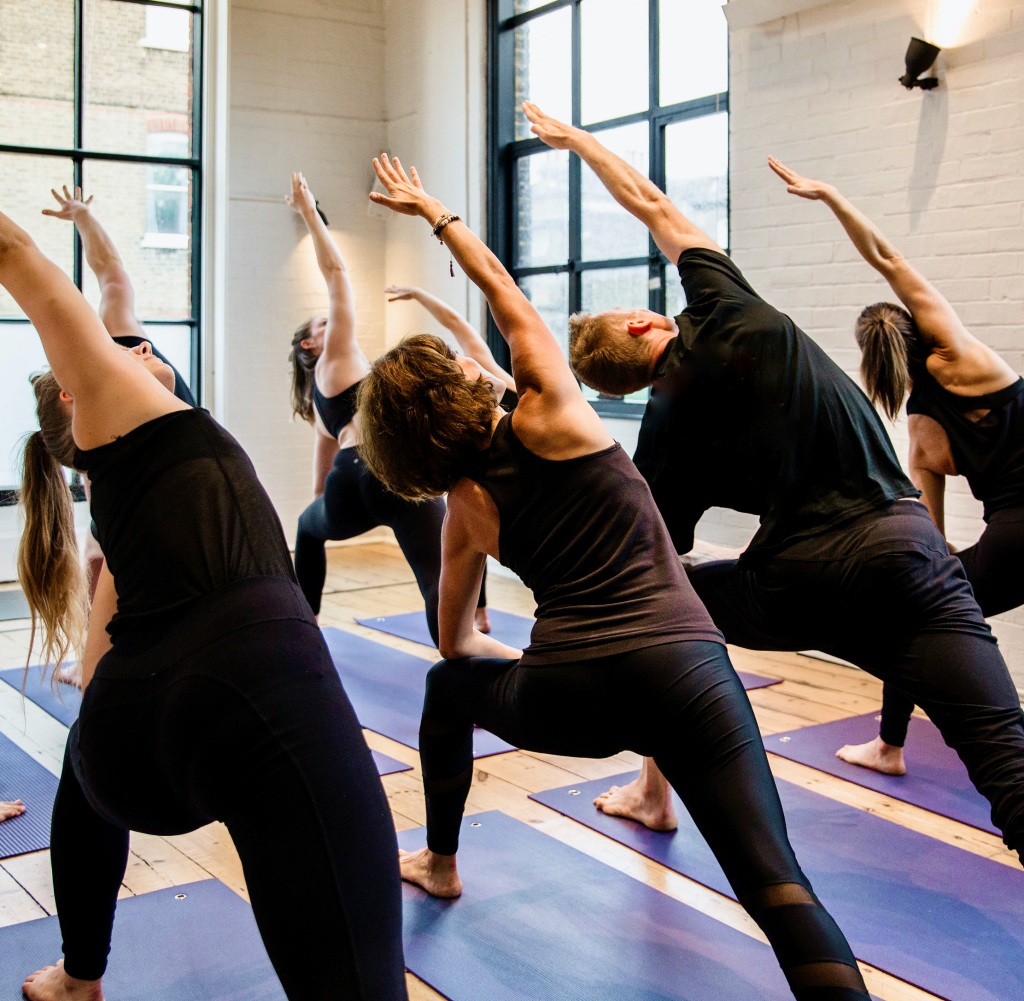
- Low lunges for the hips
- Twists for spinal mobility
- Chest-opening postures for the upper body
- Hamstring stretches
- Controlled core exercises
- Shoulder stability work
The goal is not extreme flexibility, but rather helping the body move more comfortably and efficiently.
The role of strength in desk-based lifestyles
When people think about yoga or Pilates, they often focus on stretching, but both practices can also help develop strength and stability.
Long hours spent sitting can contribute to weakness in key supporting muscles, particularly through the posterior chain, including the glutes, core, and upper back. This imbalance can influence posture and movement patterns over time.
Power Yoga classes combine flowing movement with bodyweight strength work, balance, and coordination. Reformer Pilates also places a strong emphasis on controlled resistance and stabilisation.
Building strength in these areas may help support:
- Better posture
- Improved balance
- More efficient movement patterns
- Reduced muscular fatigue
- Greater body awareness
For many people, the combination of strength and mobility work feels especially valuable because it addresses multiple aspects of modern sedentary lifestyles at once.
Stress, tension, and the nervous system
Desk-based work does not only affect the body physically. Many professionals spend their days moving between meetings, deadlines, notifications, and constant mental stimulation.
Stress often shows up physically in the body through:
- Tight shoulders and jaw tension
- Shallow breathing
- Restlessness
- Fatigue
- Difficulty switching off after work
Movement practices that combine breath and physical awareness can help create a transition away from work mode. Even a single class can provide an opportunity to slow down, focus attention elsewhere, and reconnect with the body after a mentally demanding day.
This is one reason why many people find evening yoga or Pilates classes beneficial. The combination of movement, concentration, and breath awareness encourages a different pace and rhythm compared to the working day.
Yin yoga can be particularly supportive for recovery and relaxation, while more dynamic Power Yoga practices may help release physical tension while also improving focus and energy.
Why consistency often matters more than intensity
One of the biggest misconceptions around movement is that every session needs to be intense to be worthwhile. In reality, consistent movement habits are often far more sustainable and beneficial over time than occasional extreme workouts.
For people with desk-based jobs, regular movement can help break up long periods of inactivity and create more balance throughout the week. This does not necessarily mean training every day or pushing to exhaustion.
Sometimes the most effective approach is simply incorporating movement consistently in a way that feels manageable and supportive.
That might include:
- Attending a few classes each week
- Taking short mobility breaks during the workday
- Stretching in the evening
- Prioritising recovery alongside strength work
- Exploring different movement styles depending on energy levels
A balanced approach is often easier to maintain long term.
Movement as part of a sustainable routine
Modern wellness conversations can sometimes become overly focused on extremes, productivity, or rapid transformation. However, for many people, movement is most valuable when it becomes a realistic and enjoyable part of everyday life.
Yoga and Pilates can offer something different from purely performance-driven exercise. Alongside physical benefits, they can also create space for concentration, breath awareness, recovery, and mental clarity.
This can be especially important for people spending much of their week working indoors, sitting at desks, or navigating busy professional schedules.
Rather than viewing movement purely as another task to complete, many people begin to see it as a way to feel more balanced, energised, and connected to their bodies again.
In a world where desk-based work is unlikely to disappear anytime soon, building regular movement into daily life can make a meaningful difference, not only physically, but mentally as well.